The short answer is yes, and the useful answer takes a bit longer, because the people who come back disappointed are almost never disappointed by the reef. They are disappointed by the boat they chose, the day they chose, or a picture in their head that no reef anywhere could match.
So this is written the other way round from most reef guides. Rather than selling you the wonder, it sets out what a day actually costs in 2026, what you physically get for it, the four kinds of traveller who genuinely should not book one, and what to do instead if you are one of them. We rank reef operators elsewhere on this site and earn a commission when you book through us, which is exactly why this page has to be straight with you about when not to.
What a reef day actually costs in 2026
The advertised price is rarely the wharf price, and this is the single most common complaint we see. Two industry-wide add-ons do most of the damage: a fuel surcharge, typically around A$10 per adult, and the government's Environmental Management Charge, the reef levy, which some operators bundle into the fare and others itemise at checkout.
Across the Cairns operators we track, the honest all-in range for an outer-reef day is A$235 to A$338 per adult. That is before a certified dive, an introductory dive or a helicopter add-on, any of which will move you toward A$400 to A$500. Our own rankings publish all-in figures with the compulsory extras stated underneath, precisely because the gap between the advertised number and the real one is where people feel cheated.
- Pontoon days (Quicksilver, Sunlover, Reef Magic): roughly A$307-338, and the most included per dollar for non-swimmers
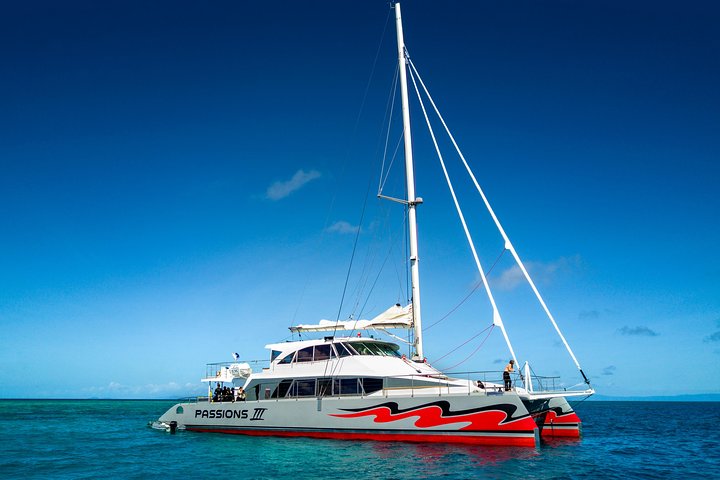
- Sailing catamarans and dive boats (Passions of Paradise, Divers Den, Ocean Freedom): roughly A$260-289, more water time, fewer facilities
- Add a certified dive: usually A$70-100 on top; an introductory dive costs more, not less
- Add a scenic helicopter leg: from around A$249-289 for 40 minutes
What you actually get for it
An outer-reef day from Cairns is an 8 to 10 hour commitment, of which 60 to 90 minutes each way is the open-water crossing. What is left is roughly three to five hours at the reef itself, usually split across two moorings, which is far more water time than most people expect and far less total reef time than the brochure photograph implies.
That is still the correct trade. The outer reef is a genuinely different place from the inner reef and the island fringing reefs: better visibility, better coral structure, bigger fish, and the sheer scale that makes the thing famous. Nobody who has seen both confuses them.
Is the reef still worth seeing after the bleaching?
This is now the most common question we get, and it deserves a straight answer rather than either denial or despair. The Great Barrier Reef has been through repeated mass bleaching events, and coral cover varies enormously between reefs, between years and between individual sites on the same reef. Anyone who tells you it is all dead is wrong, and anyone who tells you nothing has changed is also wrong.
The practical consequence for a visitor is this: which site your boat moors at matters more than which brand is painted on it. Operators with multiple exclusive moorings can move to whatever is in the best condition on the day, which is a genuine advantage rather than marketing. If reef health matters to you, ask the operator directly which sites they are using this season, and give weight to the ones with several moorings to choose from.
We do not publish reef-condition assessments of our own, because we would be making them up. The Australian Institute of Marine Science publishes annual coral cover surveys, and that is the source to read rather than any tour company's website, ours included.

Who should not book one
Four groups regret this trip often enough to name, and none of them are being told so by the people selling the tickets.
- Bad sailors who do not medicate. The crossing is genuine open water. If you know you are susceptible and you will not take a tablet before boarding, you will spend A$300 being unwell where nobody can turn the boat around
- Non-swimmers who buy a dive boat. Dive-first boats are built for people who spend the day in the water. On the wrong boat a nervous non-swimmer sits on deck for five hours; on a pontoon they get an underwater observatory, a semi-submersible and a shallow entry, and have a good day
- Anyone whose only free day has a strong wind warning. Operators sail in conditions that are safe but unpleasant, and a choppy day gives you poor visibility as well as a rough ride. If your dates are flexible at all, hold the booking for the calmer forecast
- Families with under-fives on a full-day outer-reef trip. Ten hours is a very long day for a small child. The inner-reef and island half-days exist for exactly this reason
The cheaper alternatives, and what they cost you
If A$300 is not realistic, there are honest options, and pretending otherwise would be doing you a disservice. Each one trades something specific away.
- Green Island and inner-reef half-days, from roughly A$110-127: much cheaper, much shorter, and the coral is inner-reef coral. You will see fish and you will swim on a reef, but it is not the outer reef
- Half-day outer-reef trips, from roughly A$179-209: a real compromise that keeps the outer reef and cuts the day in half. Fewer sites, less water time
- A 40-minute scenic flight, from roughly A$249: the aerial view, including the shapes you have seen in photographs, but you never get in the water. Better as an add-on than a substitute
- Snorkelling from a beach further north: free, and genuinely not the same thing. The Great Barrier Reef proper is an hour and a half offshore

When it is definitely worth it
Buy the day if you are a confident swimmer travelling between June and October, you can pick your date around the forecast, and you match the boat to the kind of day you want rather than to the biggest advert. On those terms the outer reef delivers more reliably than almost any other paid experience in Australia, which is why it is the single most booked thing in the country.
And if you find yourself thinking that one day is not enough, that instinct is usually right. A liveaboard adds night diving and first light on the reef before the day fleet arrives, which are the two things no day boat can sell you at any price.
Details change. We verify every price, duration, departure point and inclusion against the operator's own website, and we date every check, but operators can change them at any time without notice. Always confirm the details that matter to you with the operator before you book.
Good to know
Is one day on the Great Barrier Reef enough?
For most visitors, yes. A single outer-reef day gives you three to five hours in the water across two moorings, which is enough to understand what the fuss is about. It is not enough if you are a diver: night dives, dawn on the reef and the far northern sites are liveaboard-only, and no day boat can offer them.
What is the best month?
June to October, the dry season, has the calmest crossings and the clearest water of the year, and no stingers. November to May is warmer but brings box jellyfish, so operators supply stinger suits, and the seas are less predictable. The reef itself is worth seeing in any month; the boat ride is what changes.
Do I need to be able to swim?
Not on a pontoon trip. Pontoons have underwater observatories, semi-submersibles, shallow entries and flotation aids, and plenty of guests never swim unaided. On a dive-first boat you will have a much thinner day. This one decision matters more than which operator you pick.
Is it worth paying extra for a helicopter add-on?
Only if the aerial view is something you specifically want, because it buys you no additional time in the water. A 40-minute scenic flight runs from roughly A$249. If your budget is fixed, the same money is better spent on a certified dive or on a second reef day at a different site.
Should I book direct or through a booking platform?
We checked, and the price is almost always the same either way. Book wherever the cancellation terms are kindest, because weather is the real risk on this purchase. If you use our links we earn a commission at no cost to you, and if the operator's own terms are better on your dates, use theirs.